
We recognise there have been calls from across the education and health sectors to reduce unnecessary regulatory burden and overlap.
We know this is important for education providers, considering current financial challenges, and health and education policy changes that will affect the work of the sector.
We aim to take a right-touch approach in our work. This means understanding the problem before jumping to the solution. It helps us apply the right level of regulatory intervention to achieve good quality assurance of education and training programmes.
In this context, burden can be seen as the impact of our regulatory activities on organisations. This includes how regulatory compliance is managed in terms of resource, cost, time, and complexity. Overlap relates to situations where bodies with similar functions carry out the same or similar activities with a regulated organisation.
We have been working to reduce regulatory burden and overlap linked to our duties and have delivered several changes to how we operate to support this aim. These changes have had a positive impact for education providers and others we work with, while keeping our public protection role central to our work. We recognise there is more we can do to make sure education providers experience a clearer reduction in regulatory overlap, and that our decision making is better informed.
It is important we continue to fulfil our duties to keep the public safe by effectively quality assuring the education and training of professionals joining our Register. We recognise that we work within wider quality assurance / enhancement and regulatory systems. We are one of many organisations involved in this area, and each may have different priorities for their work. We can take independent action to reduce burden for areas within our control, and work with sector partners to influence and drive change.
What we have done so far
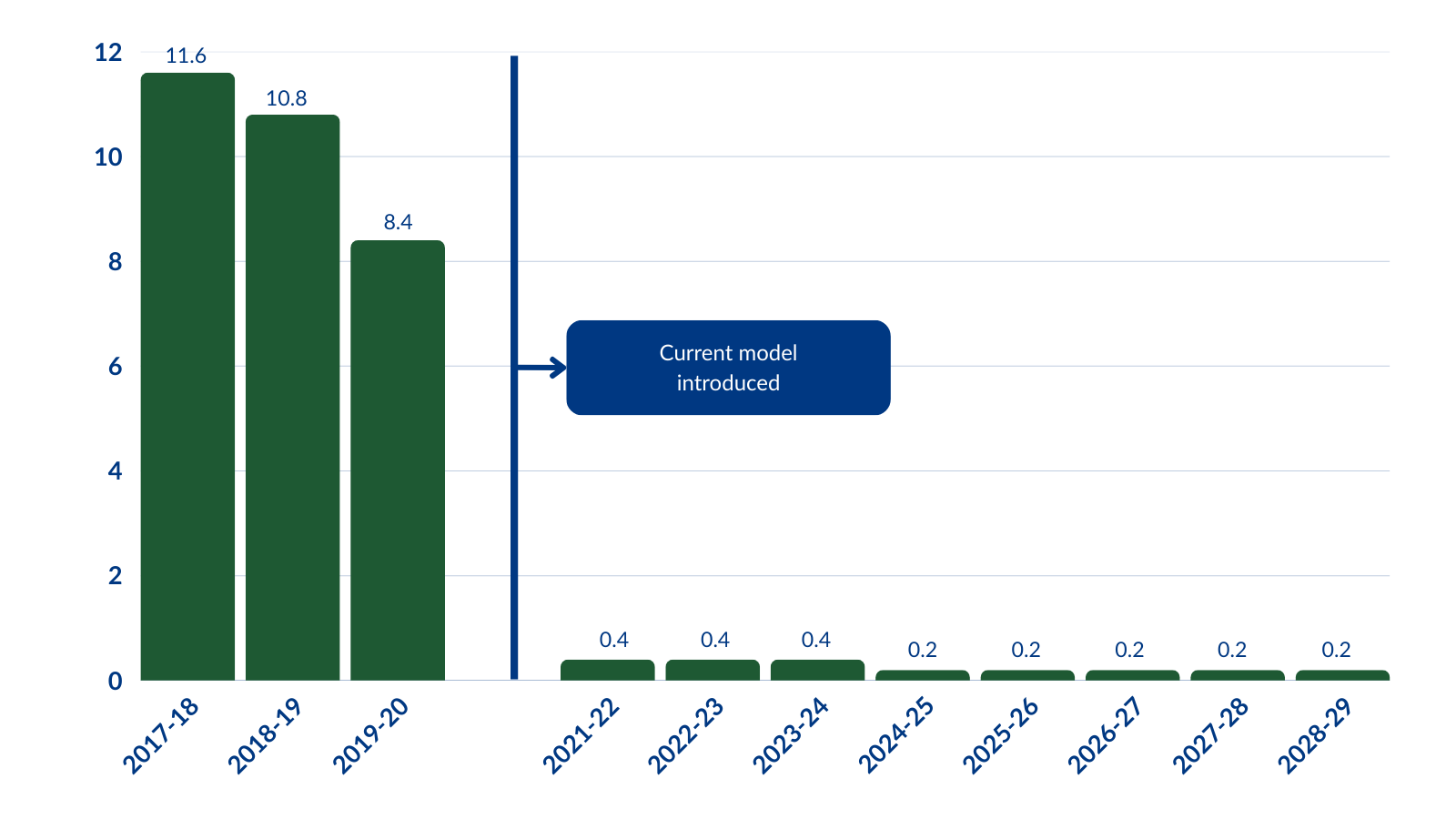
We have centred right-touch regulatory principles through the development of our current education quality assurance model which we implemented in September 2021. This resulted in designing our model to reduce burden in many areas of our assessment work with education providers. Key changes and comparisons between the previous and current models are set out below:
We recognise that we work within wider quality assurance, quality enhancement and regulatory systems. We are one of several organisations involved in this area, and each may have different priorities.
We can take independent action on areas within our control, and work with sector partners to influence and drive change.
The impact of the above on education providers is as follows:
Reduction of the number of standards to demonstrate through the approval process
- 29 of our standards of education and training (SETs) sit at the institution level.
- These standards are only evidenced fully by education providers for visitor-led stage 1 assessment (institution level review).
- Compared to previous model, only 44% of the standards need fully evidencing for most of approval assessments.
Average number of monitoring submissions per education provider (per year)
How we use data and intelligence to inform our assessments and view of quality
Established regular external data supplies (HESA, OfS, TEF)
The data we hold
Enabling longer periods between reviews
Intervention when we find problems with data
Education providers
Relevant bodies (eg NHS England, HEIW, NES)
Professional bodies
Other regulators
Not all education providers are covered by the data we receive. Where we do not have regular data supplies for an education provider, the maximum period between our monitoring assessments is two years. We have established a process that allows these education providers to set up data returns with us directly, which would help them move beyond a two-year monitoring period.
How we use intelligence to inform how we respond to external developments
Drawing on our extensive work with, and knowledge of, the education and health sectors, we define key focus areas for our performance review monitoring process. This helps us set context for our assessments. Our approach makes sure that our assessments are grounded in a clear understanding of sector priorities and challenges.
We also have the capability to consider developments and initiatives at an early stage, allowing us to assess their broader impact and reduce burden. For example, we evaluated the HEIW commissioning exercise for allied health programmes in Wales, and implemented a bespoke approval process for new programmes. This process incorporated HEIW requirements as part of the evidence needed for alignment with our standards, which meant not all standards needed to be directly evidenced through our assessments.
How we have developed our approach since implementing our current quality assurance model
We have undertaken the following activity to develop our model since implementing it in September 2021.
What we plan on doing
We need to make sure that education providers and programmes meet our regulatory standards. We recognise that this may sometimes feel burdensome for education providers. We would like providers to experience a reduction in regulatory burden and overlap and make sure that our decision making is better informed.
We think we can do this by:
- Improving purposeful, joined-up working across regulators and professional bodies.
- Making sure we engage well with stakeholders, so we understand their positions and concerns.
Some of the actions that will help us develop in this area include:
- Developing our data supplies, to enable richer data to inform our work.
- Identifying opportunities to take assurance from national, regional or professional initiatives, rather than always at an individual provider or programme level.
- Working closely with:
- Other UK health and care regulators, to understand and inform our regulatory responses to specific areas, through 1-2-1 relationships and an education inter-regulatory group;
- Professional bodies for our professions, to understand and inform our responses to specific areas, through 1-2-1 relationships and an HCPC-led forum group.
We would like to consider where our requirements overlap with the requirements / expectations of others. This may include taking assurances from each other’s work.
Your views
We would like your views on what we could do to reduce regulatory burden and overlap. Please use this form to share your views